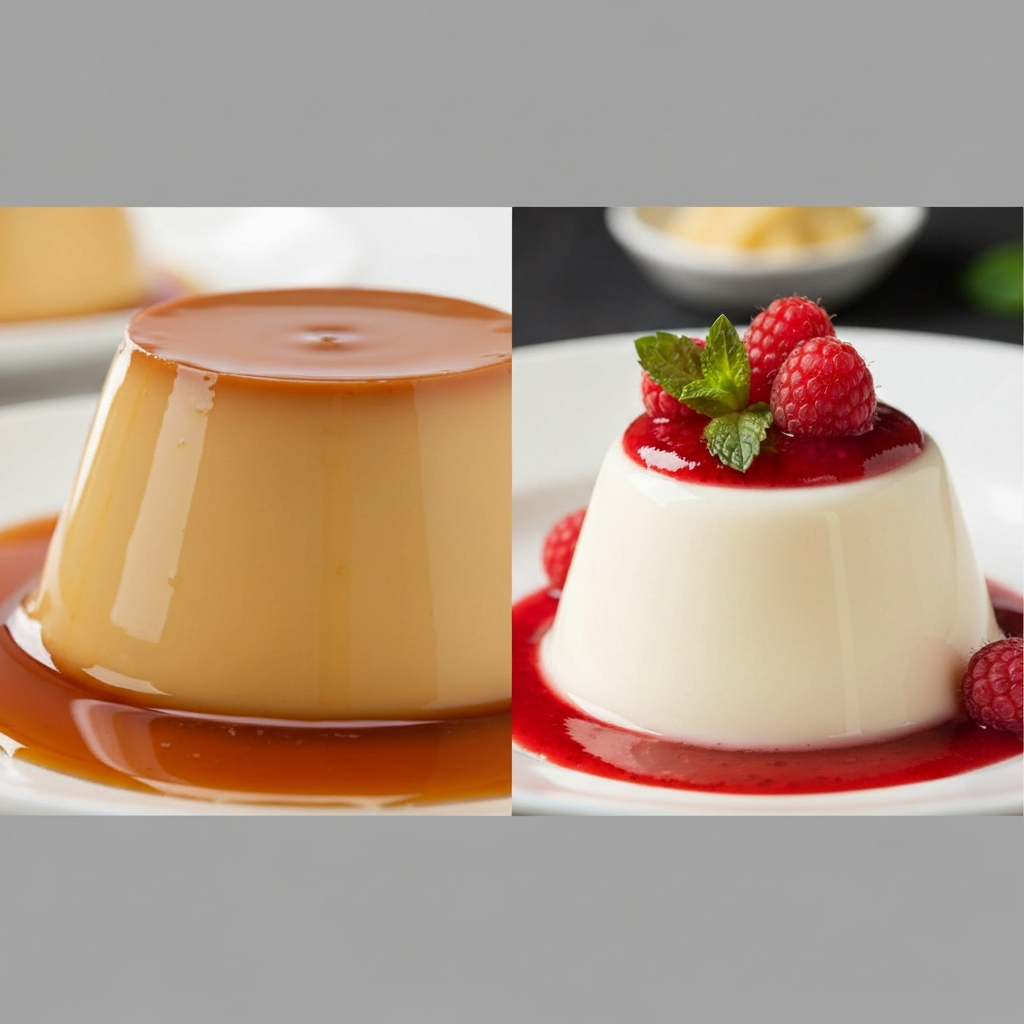
Did you know that the word “flan” can refer to a variety of baked or steamed desserts, often with a pastry crust? While both flan and panna cotta are beloved creamy desserts, they have distinct origins, ingredients, and preparation methods that set them apart. Understanding these differences can help you choose your next delightful treat or even inspire your own kitchen adventures.
The Essence of Flan
Flan, particularly the caramel custard version popular in many parts of the world, is a dessert with deep roots. Its origins can be traced back to ancient Roman times, evolving through centuries and across cultures. The classic flan is characterized by its silky custard base, typically made with eggs, milk or cream, and sugar, all baked or steamed until set.
The defining feature for many is the rich caramel sauce that is poured into the baking dish before the custard. As the flan bakes, the caramel melts and creates a luscious topping that caramelizes further, providing a sweet and slightly bitter contrast to the creamy custard. This caramelization process is crucial and requires careful attention to achieve the perfect color and flavor. For a delightful take on this classic, check out this Flan Recipe.
The Charm of Panna Cotta
Panna cotta, on the other hand, hails from the Piedmont region of Italy. Its name literally translates to “cooked cream,” which perfectly describes its primary ingredient and preparation. Unlike flan, panna cotta relies on gelatin as its setting agent, rather than eggs.
This results in a lighter, more delicate texture that often has a slight wobble. The base of panna cotta is typically made from cream, sugar, and a flavoring agent, most commonly vanilla. After the mixture is heated and the gelatin is dissolved, it is poured into molds and chilled until firm. Panna cotta is often served with a variety of toppings, such as fruit coulis, fresh berries, or chocolate sauce, offering a versatile canvas for different flavor profiles.
Key Differences Summarized
The most significant distinctions lie in their setting agents and texture. Flan uses eggs, which contribute to a richer, denser custard and often a smoother mouthfeel due to the emulsifying properties of egg yolks. Panna cotta uses gelatin, yielding a more jiggly and often lighter dessert. The caramel component is also a hallmark of traditional flan, whereas panna cotta is more commonly served with fruit-based sauces or other garnishes.
Both desserts showcase the beauty of simple ingredients transformed through careful preparation. For more on the history and cultural significance of desserts, you can explore resources on culinary history. Understanding the nuances of these beloved treats can enhance your appreciation for the art of dessert making, whether you’re enjoying a slice of flan or a spoonful of panna cotta.
Conclusion
Both flan and panna cotta offer unique and satisfying dessert experiences. Whether you prefer the rich, eggy custard and caramelized topping of flan, or the delicate wobble and versatile flavors of panna cotta, both are wonderful ways to end a meal. Exploring these desserts can be a delightful journey into different culinary traditions.